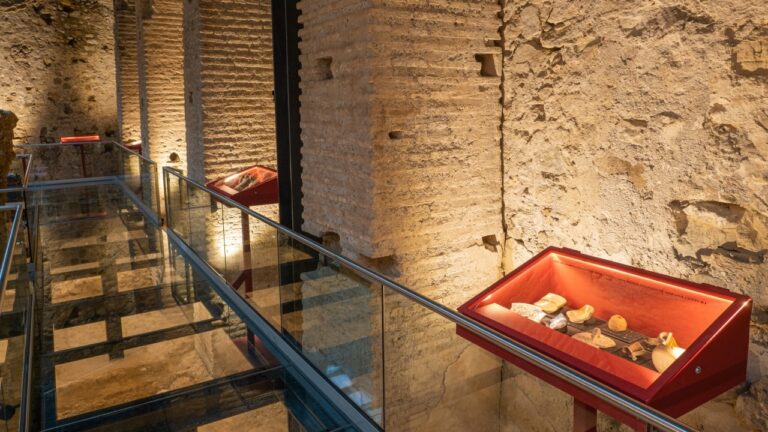
The data reflects the keen interest in this local establishment as a key part of the city’s cultural and touristic identity, paving the way for new interpretive activities, events, and the dissemination of its contents. The Castle of San Luis marks its first year as a municipal exhibition center with over 34,500 visitors. Following the excavation and restoration efforts led by the City Council, this 16th-century fortress, now transformed into a museum, has captured the attention of residents and tourists alike, who appreciate the quality of the restoration work and the significance of this site in expanding their understanding of the city’s history. Over recent years, the Castle of San Luis has undergone a comprehensive restoration project to preserve and revive this coastal stronghold built in the late 16th century, situated within the city’s historic center. The restoration has allowed for the enhancement of these neglected remains, which had been unused for nearly a century. The aim of the restoration project, chosen by the local government, was to unveil this hidden gem and convert it into an exhibition venue where visitors could delve into a crucial chapter of Estepona’s history. Alongside exploring the site, visitors can witness various archaeological findings from different periods unearthed during the restoration works, such as artillery ammunition, religious artifacts, pottery, and even an old shelter from the Spanish Civil War. The significant number of visits recorded in this inaugural year underscores the interest in this historical treasure, particularly following its recent revival and integration into the town’s cultural itineraries. The visitors’ demographic includes both domestic and international travelers, along with locals intrigued by the town’s historical legacy. Furthermore, the center plays a vital role in educating young people, having welcomed student groups from local schools this year. Daniel Garcia, the councilman overseeing Historical Heritage, highlighted that these visit figures demonstrate ‘the growing fascination with Estepona’s historical resources observed in the city, solidifying the castle’s position as a pivotal element of the municipality’s cultural and touristic landscape.’ He also emphasized its ‘potential to expand interpretive activities, cultural events, and educational outreach.’ The restoration and enhancement of the Castle of San Luis unfolded in stages, starting with the City Council’s acquisition of adjacent properties concealing the site. Subsequently, the area underwent extensive archaeological work focusing on cleaning, preservation, stabilization, and consolidation of the existing remains, as well as clearing the vegetation entwined with the structure. The site features a pathway allowing visitors to explore the castle’s interior and admire the remnants from different historical eras unearthed during excavation and archaeological digs. Additionally, informative panels and interactive audiovisual aids aid in interpreting the surroundings. Historical Significance This initiative at the Castle of San Luis carries immense historical value, shedding light on centuries of Estepona’s history through a tour of the monument, offering a historical haven comprising 16th-century flooring, 18th-century walls, and even older elements. The Castle of San Luis de Estepona, a coastal fortress erected in the late 16th century, was constructed as part of the defense reorganization of Málaga’s western coast following the Moorish uprising in 1568. Originally designed to fortify the southern face of the Islamic walls, overseeing the natural harbor of La Rada beach, its notable features included three artillery bastions and a spacious columned parade ground with multiple barracks. During the mid-18th century, a section of the Castle of San Luis underwent significant remodeling to serve as a cannon battery. Despite the damages caused by the 1755 Lisbon earthquake and the demolitions during the French occupation in 1812, much of the castle was abandoned and fell into disrepair, with only the cannon battery surviving and being integrated as a courtyard in a house constructed in the late 19th century.
Author